Would You Sing?

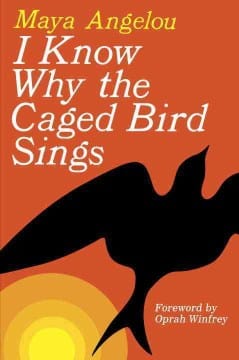
I joined a local book club a year ago to learn from fellow readers and to read great books that I might miss otherwise. And that has happened. Prior to Maya Angelou showing up as a book club selection for 2026, I only knew of her vaguely as a poet. Poetry and I don’t spend much time together. So, I was unprepared for what I encountered in I Know Why the Caged Bird Sings. Published in 1969, it is Angelou’s autobiography of her early life through age seventeen. It is at times lyrical, raw, understated, shocking, brilliant. But it is never dull.
I read a library copy, because 2026 was going to be the year I did not buy books faster than I could read them. Well, that was a mistake. I nearly always annotate as I read. But, I learned in kindergarten that library books are second order sacred texts which are never to be marked in. Instead, I took a hodge-podge of notes on my phone, not nearly as helpful as scribbling in an actual book. And no personalized cover photo. Sorry, I digress.
With I Know Why the Caged Bird Sings, Angelou gave me a glimpse inside her world, a world so different from my own for two principle reasons: I am neither Black nor female. Still, the prologue starts her story with an Easter Sunday incident in church when she was eight years old. I could relate to embarrassing childhood moments in church.
Sent to live with her paternal grandmother at age three, Maya experienced a religious environment that gave her grandmother ‘Momma’ strength to endure the hardships of the entrenched racism of Stamps, Arkansas. That heritage was a source of both hope and disappointment for young Maya. Angelou’s immersion in the Colored Methodist Episcopal Church infuses her vocabulary with Biblical language.
To be Black and female in the deep South of the United States was a particularly hazardous destiny. Maya describes so well the ‘otherness’ of white people. They were wealthy. They were powerful. They could with impunity treat Blacks as lesser creatures, ranging from disrespectful slights by “powhitetrash” to the KKK searching for victims to lynch. I found it fascinating that as a child she assumed God was white, that she referred to Shakespeare as “her first white love”.
More harrowing was Maya’s rape at the hands of her mother’s boyfriend, a Mr. Freeman, when Maya and her brother Bailey had been sent back to St. Louis by their father. Maya was eight years old. The outfall from this event caused Maya to become nearly mute for five years, speaking only rarely to her brother in that interval.
Maya’s childhood can be kindly described as nomadic:
1928 – Born Marguerite Annie Johnson to Bailey and Vivian Johnson in St. Louis.
1931 – Her parents divorce, send Maya and brother Bailey, Jr., to Stamps, Arkansas.
1935 – Both children sent back to their mother’s home in Saint Louis, by their father.
1936 – Both are sent back to Stamps shortly after Maya’s rape. It was during this time in Stamps that she met Mrs. Flowers, a teacher who introduced her to great literature and encouraged her to find her voice in poetry.
1942 – Sent with Bailey, Jr. to Oakland, California to live with mother. Over the next two or three years, spent time living with her mother, her father, being homeless, then back to her mother’s until the birth of her son in 1945.
While Angelou’s story is, of course, uniquely her own, it speaks for many others not gifted with the strength to endure or the words to tell. She speaks for a whole generation.
These are a sample of passages that caught my attention:
· Of all the needs (there are none imaginary) a lonely child has, the one that must be satisfied, if there is going to be hope and a hope for wholeness, is the unshaking need for an unshakable God. My pretty Black brother was my Kingdom Come.
· “Thou shall not be dirty” and “Thou shall not be impudent” were the two commandments of Grandmother Henderson upon which hung our total salvation.
· People in Stamps used to say that the whites in our town were so prejudiced that a Negro couldn’t buy vanilla ice cream. Except on July Fourth. Other days he had to be satisfied with chocolate.
· But what mother and daughter understand each other, or even have the sympathy for each other’s lack of understanding?
· I have tried often to search behind the sophistication of years for the enchantment I so easily found in those gifts. [The gifts are books Mrs. Flowers gave her to read and recite].
· The Black Female is assaulted in her tender years by all those common forces of nature at the same time that she is caught in the tripartite crossfire of masculine prejudice, white illogical hate and Black lack of power. The fact that the adult American Negro female emerges a formidable character is often met with amazement, distaste and even belligerence. It is seldom accepted as an inevitable outcome of the struggle won by survivors and deserves respect if not enthusiastic acceptance.
Our book club moderator shared this stirring interaction between Maya Angelou and Oprah Winfrey recorded about a year before Angelou’s death. It is a potent testimony of a survivor who indeed deserves respect, acceptance, and admiration.
https://youtu.be/6RzyfSsIUt4
For those who prefer audiobooks, I understand from fellow book club members that the version narrated by Maya Angelou herself is an even better literary experience.
Until next time…