A Woman's World

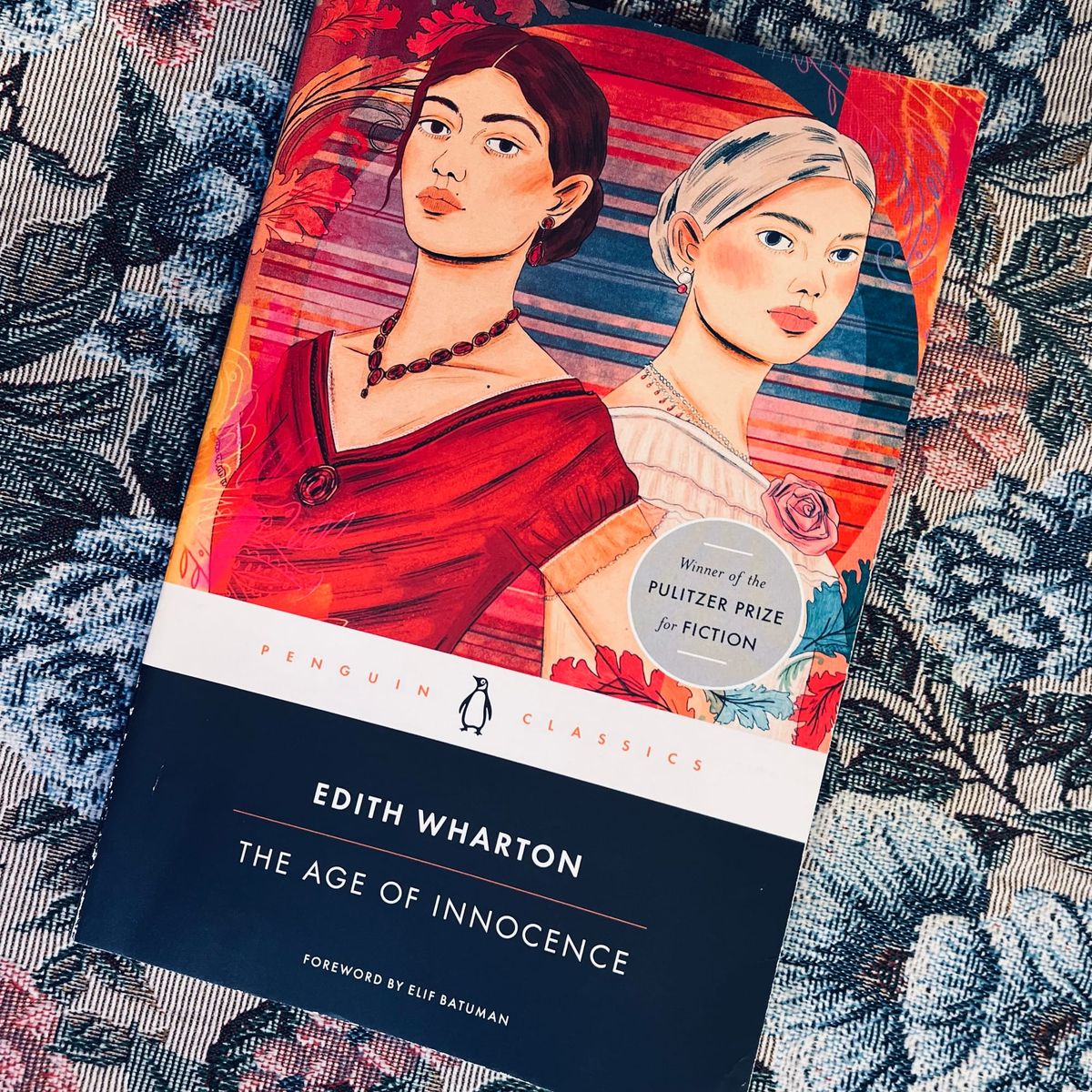
How, I wondered, did a novel written in 1920 about the elite families of New York City in the 1870’s become the first Pulitzer Prize winner for a female author? I recently found out when The Age of Innocence by Edith Wharton was my book club’s March selection.
It would be simplistic to distill The Age of Innocence down to its central plot point of a tragic love triangle. Newland Archer is the man whose words and actions tell the story. What we learn about May Welland, his fiance, and Ellen Olenska, May’s cousin, is from Newland’s perspective. What we learn of the old families who form New York’s upper crust is seen through his eyes. This, I learned, is ‘Third Person Close’ point of view. I don’t know what that means. My literary tidbit dispensed with, we can proceed.
The strictures of society and the place of women in it have no doubt changed since Wharton’s time, when little was said directly, but much was implied. Propriety had clear boundaries. “The thing to do” comes up as Archer begins the tale. From something as mundane as when to arrive at an opera to as consequential as when to “sow wild oats”. The “the thing” for young men and young women in wealthy, old New Yorker families was a suitable marriage. While men had their work, women had marriage.
Archer is quite proud of his choice of May, and May is emminently pleased to be chosen. Then, cousin Ellen, the Countess Olenska, arrives from Europe trailing the scandal of a troubled marriage with a husband still in France, looking for the peaceful New York of her childhood. From there, Wharton delves into the turbulent subterranean flow of emotion that starts out as simple kindness, but might be called love if it were spoken aloud.
“You never did ask each other anything, did you? And you never told each other anything. You just sat and watched each other, and guessed at what was going on underneath.” – Archer’s son Dallas
Archer reads much into the action or inaction of both May and Ellen, then finds himself disappointed when reality proves different. He starts out certain that he knows how marriage with May will unfold, only to find her strengths and weaknesses different than he imagined. In their brief encounters, we see that while both Ellen and Archer long for each other, her desire is based on a clearer understanding of the cost.
Ellen: “But from the very beginning… I felt there was no one as kind as you… you understood; you had felt the world outside tugging at one with all its golden hands—and yet you hated the things it asks of one; you hated happiness bought by disloyalty and cruelty and indifference.”
Much later comes this exchange:
Archer: “Then what, exactly, is your plan for us?”
Ellen: “For us? But there’s no us in that sense. We’re near each other only if we stay far from each other. Then we can be ourselves. Otherwise we’re only Newland Archer, the husband of Ellen Olenska’s cousin, and Ellen Olenska, the cousin of Newland Archer’s wife, trying to be happy behind the backs of the people who trust them.”
Ellen loves the Newland Archer who would cease to exist if they pursed each other. What happens then to Archer, May, and Ellen? Does this mess created by profound human emotions stirred by kindness, by friendship, by good intentions ultimately get resolved? Read The Age of Innocence and find out. Edith Wharton describes that 1870’s New York society with delicious irony, while plumbing the depths of human spirit hidden in a world dictated by form and ritual. If you must ‘cheat’, the 1993 movie of the same name is excellent, lifting much of the dialogue directly from the pages of the book.
Does The Age of Innocence have value in our contemporary society; one that has jettisoned conventions; where freedom to chart one’s own course in love is unquestioned; where mistrust seems the byword among men and women? One final snippet:
Archer: “…I want somehow to get away with you into a world… Where we shall be simply two human beings who love each other, who are the whole of life to each other; and nothing else on earth will matter.”
Ellen: “Oh, my dear—where is that country? Have you ever been there? I know so many who’ve tried to find it…and it wasn’t at all different from the old world they’d left, but only rather smaller and dingier and more promiscuous.”
Far more than Archer, Ellen knows the consequences of broken trust – greater to women in that day, perhaps, than now. Yet, in our attempt to make a world of absolute freedom, where‘nothing else on earth will matter’, we have, perhaps, made it ‘smaller and dingier and more promiscuous.’ A world of serial relationships and broken trust. Yet, the promise of trust remains. Around each of us is a real world with a circle of people we know, to whom we have a duty, a commitment of fidelity in marriage or family or friendship that can be fulfilled or neglected. On the other side of that equation is someone looking for a trustworthy companion. Start there. Make that someone’s world larger and brighter and more faithful. You will find something more precious than unbridled freedom.
Until next time…