Book Bound #47 – Some Lighter, Brighter Reading

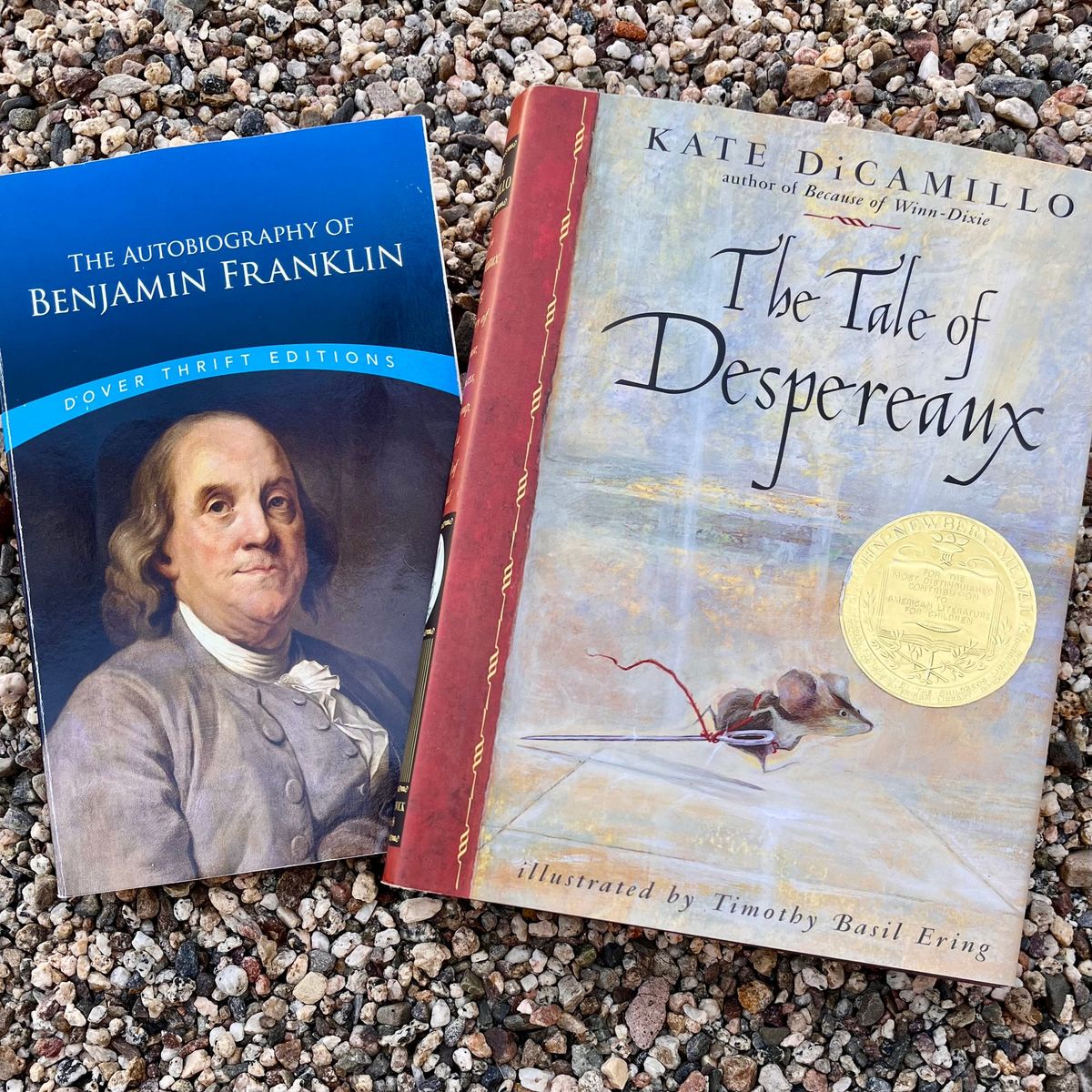
A friend suggested that I read something fun. Because, my recent selections have leaned heavily on the serious side. In that spirit, this edition features two books with almost nothing in common, except I enjoyed reading them. A double feature! How fun!
The Autobiography of Benjamin Franklin
For the longest time, I knew two things about Benjamin Franklin. His face was on the American $100 bill and he flew a kite during a storm to test the electrical properties of lightening. I had never read a book by or about Benjamin Franklin. Frankly, (pun intended), I only picked up Franklin’s book because it was my book club selection for August. Expectations were low. I was pleasantly surprised.
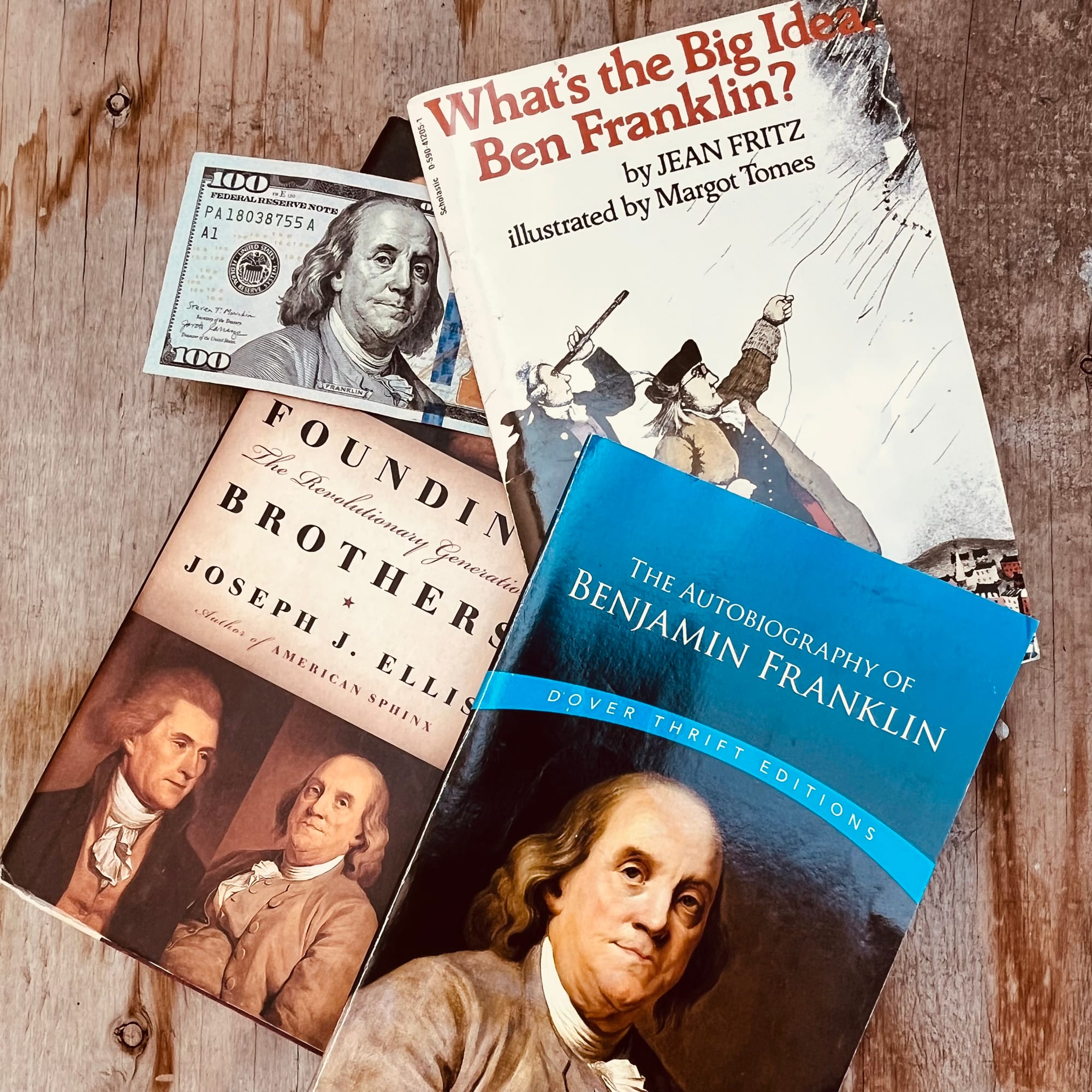
The Autobiography of Benjamin Franklin is only 136 pages long, divided into four parts written in 1771, 1784, 1788, 1789. Franklin died in 1790, leaving an incomplete work that stops in the year 1758. I found that stopping place helpful. It provides a picture of his life before he became the publicly revered American founder – his early character development, his avid reading, his relationships, his business acumen, his profoundly active mind. Of particular interest to me were Franklin’s reflections on religion and morality, which were unconventional for the time and even now defy strict categorization.
Autobiography, to be effective, needs authenticity. (Are you listening, political candidates with your sterile, ghost-written works?) Well, old Ben, who was 65 when he started, has a way with words. Plus, while he wasn’t above a little self-promotion, he is candid about his successes and his failures. His droll wit is undisguised. His opinions of others unabashed. Here are some samples that I hope will pique your appetite:
I shall indulge the inclination so natural in old men to be talking of themselves and their own past actions… And, lastly (I may as well confess it, since my denial of it will be believed by nobody), perhaps I shall a good deal gratify my own vanity.
And now I speak of thanking God, I desire with all humility to acknowledge that I owe the mentioned happiness of my past life to His kind providence…
…my indiscrete disputations about religion began to make me pointed at with horror by good people as an infidel or atheist…
I made rather a more respectable appearance in the eyes of Miss Read than I had done when she first happen’d to see me eating my roll in the street.
…the arguments of the Deists, which were quoted to be refuted, appeared to me much stronger than the refutations; in short, I soon became a thorough Deist… recollecting Keith’s conduct towards me...and my own towards Vernon and Miss Read, which at times gave me great trouble, I began to suspect that this doctrine, tho’ it might be true, was not very useful.
William Coleman, then a merchant’s clerk, about my age, who had the coolest, clearest head, the best heart, and the exactest morals of almost any man I ever met with… Our friendship continued without interruption to his death, upward of forty years.
In the mean time, that hard-to-be-governed passion of youth hurried me frequently into intrigues with low women that fell in my way, which were attended with some expense and great inconvenience, besides a continual risque to my health…
Human felicity is produc’d not so much by great pieces of good fortune that seldom happen, as by little advantages that occur every day.
[Franklin offering a practical solution to the militia chaplain about poor attendance at services.] “It is, perhaps, below the dignity of your profession to act as steward of the rum, but if you were to deal it out and only just after prayers, you would have them all about you.”
Mouse in the House
Last October, I reviewed The Beatryce Prophecy by Kate DiCamillo. At the time, I was sure I had read The Tale of Despereaux. Which was why I selected it for FUN. A few pages in, I realized I had never read it before. Maybe I had it confused with The Miraculous Journey of Edward Tulane, also by DiCamillo. Oh, the obtuse organization of my mental library. I picture a small, be-spectacled man in a frayed tweed coat wandering aisles of towering, dusty shelves muttering, “I know it is around here somewhere.” Did I mention that I really like Kate DiCamillo?
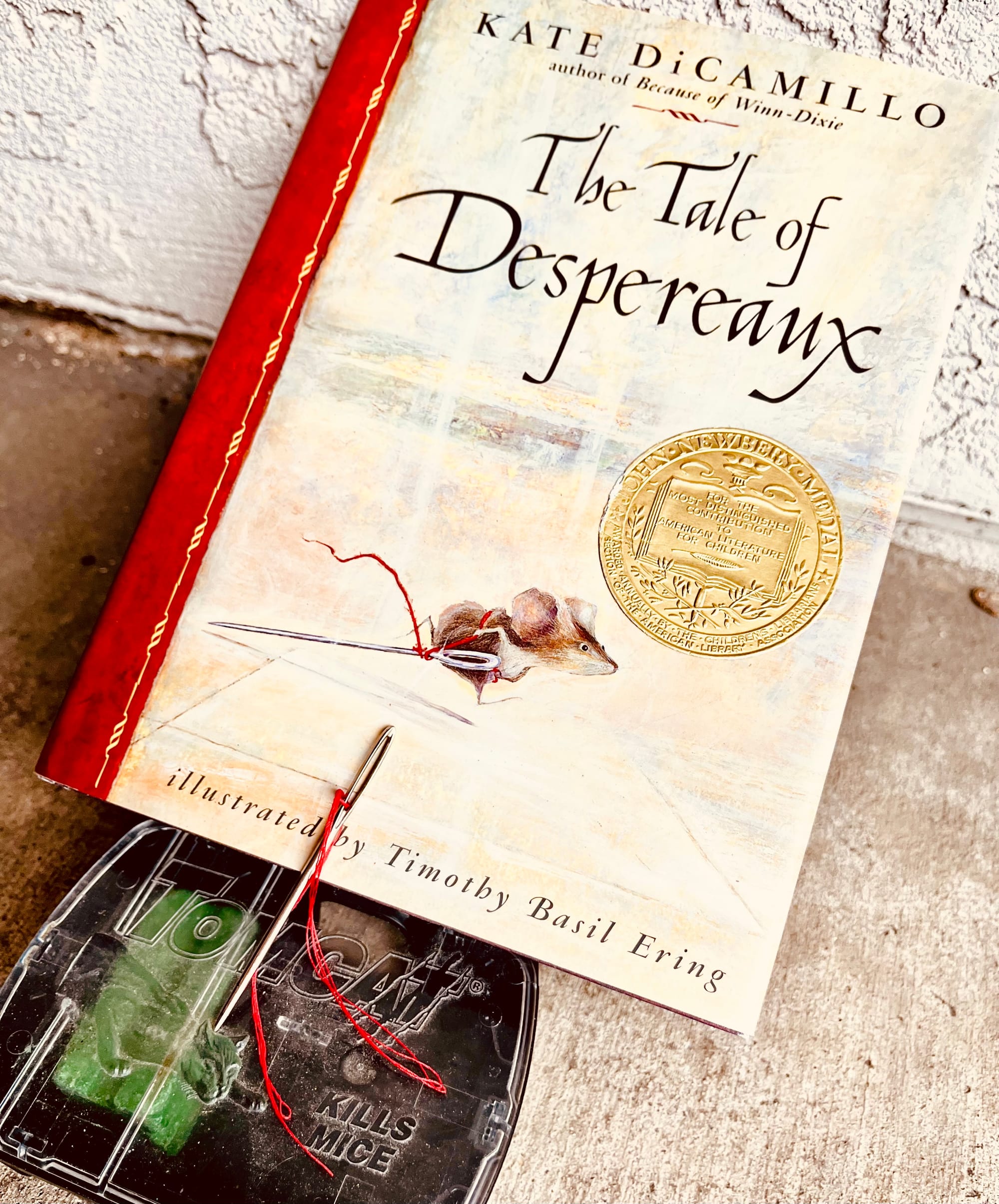
Anthropomorphized mice are so popular in books for kids. Have none of these mice-loving story-tellers had a mouse infestation? Sure, they’re cute until they start nibbling on important things and leaving their little black droppings. Yes, I’m rambling. Sorry. Okay. Back to Despereaux. (Also, a name that ends in ‘x’ is special, yes? Like Robidoux?)
Little Despereaux is the runt of the mouse litter who isn’t supposed to survive, but does. He also notices things that regular mice miss and is attracted to humans. (Like in Pixar’s “Ratatouille” movie). The unlikely hero, the unlikely heroine, unrequited love, a nasty villain or two (rats, naturally), a bumbling king and so on. Great stories work because they are strangely familiar and new at the same time. The Tale of Despereaux kept me reading because I knew that DiCamillo would drop gems of wisdom, addressed to me.
Reader, you must know that an interesting fate (sometimes involving rats, sometimes not) awaits almost everyone, mouse or man, who does not conform.
Reader, do you believe that there is such a thing as happily ever after? Or, like Despereaux, have you, too, begun to question the possibility of happy endings?
All living things have a heart. And the heart of any living thing can be broken.
When you are a king, you may make as many ridiculous laws as you like. That is what being a king is all about.
Forgiveness, reader, is, I think, something very much like hope and love, a powerful, wonderful thing. And a ridiculous thing, too.
“It seems to be that way with most things. No one to do the really disagreeable jobs except oneself.”
“Stories are light,” Gregory the jailer told Despereaux.
I am glad I finally got to meet Ben Franklin and Despereaux. They were both fascinating characters, and FUN to read about.
Until next time…