Book Bound #48 – Station Eleven

Do you have internet-induced brain rot? I am pretty sure I do. One symptom is that when I am in a conversation with a friend or family member, I find myself reaching for my smartphone for no other reason than to assure myself that I can check it once the conversation is over. Another is that no matter how much I am enjoying a book, after fifteen or twenty minutes, I start feeling the itch to do something else. I used to be able to spend hours reading non-stop. Even now, I can overcome the itch and keep reading. But often, the immersion has been disrupted. For some time, I have attributed my impatience with new reading material to the fact that, having read widely and deeply over many years, it takes a tremendously gifted writer to capture my attention. Well, that certainly appealed to a certain noble, vain-glorious side of me. I think the truth is closer to internet brain rot. Years of reading articles built for screen consumption in five minutes have trained my brain for impatience, regardless of the quality of the reading material.
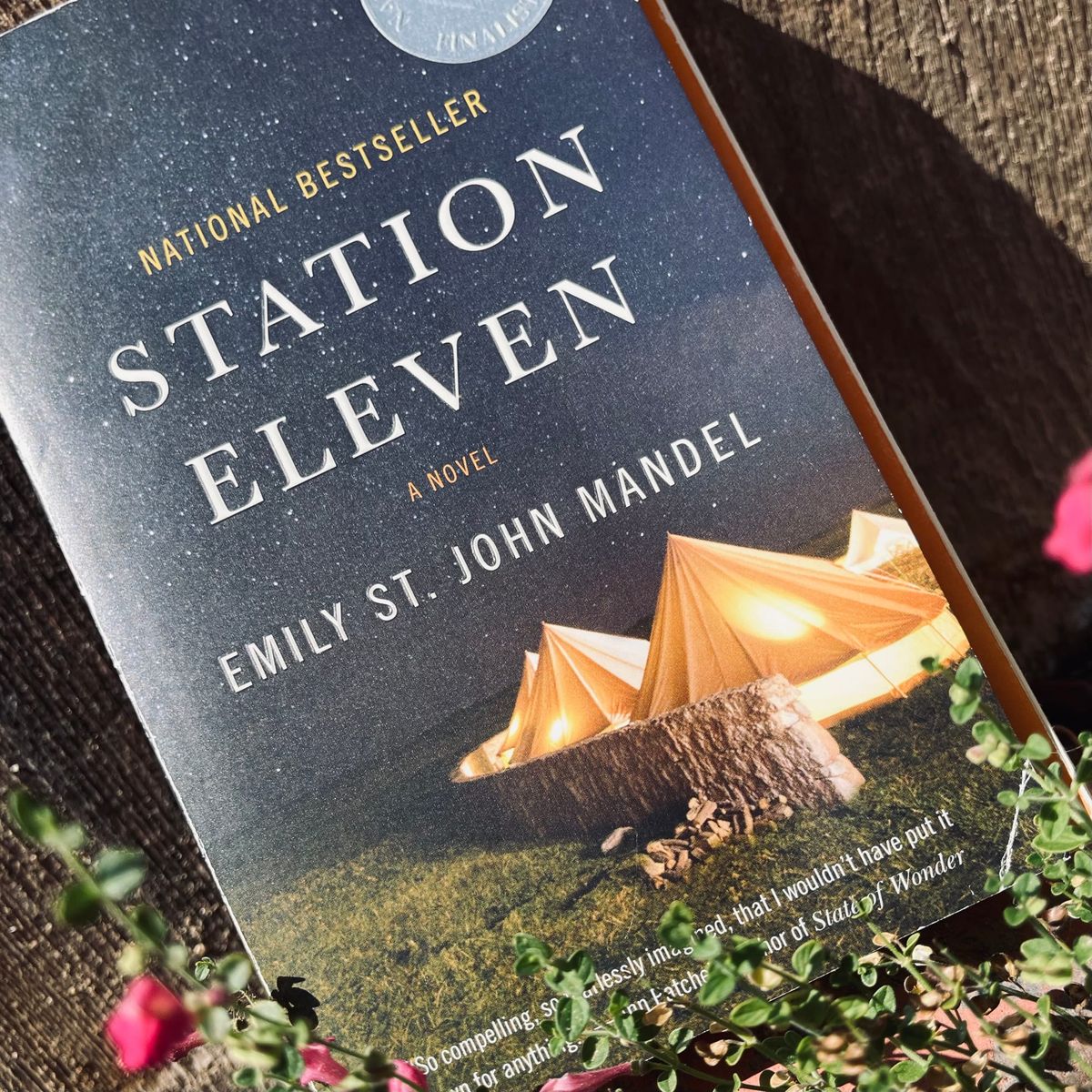
All that as a not-so-brief introduction to a book that I classify as ‘hopeful dystopia’. It is one of those books that I have noticed for several years at the bookstore. Unlike most books, which appear with a splash, then a year later are on the $5 discount rack, this one came out in 2014 and stayed in print ever since. I am speaking of Station Eleven, by Emily St. John Mandel. The book has won multiple awards, is translated into multiple languages, was made into an HBO mini-series. But, in the true mark of a book with long-lasting literary and cultural impact, Station Eleven has been released this year in a beautifully illustrated edition from The Folio Society.
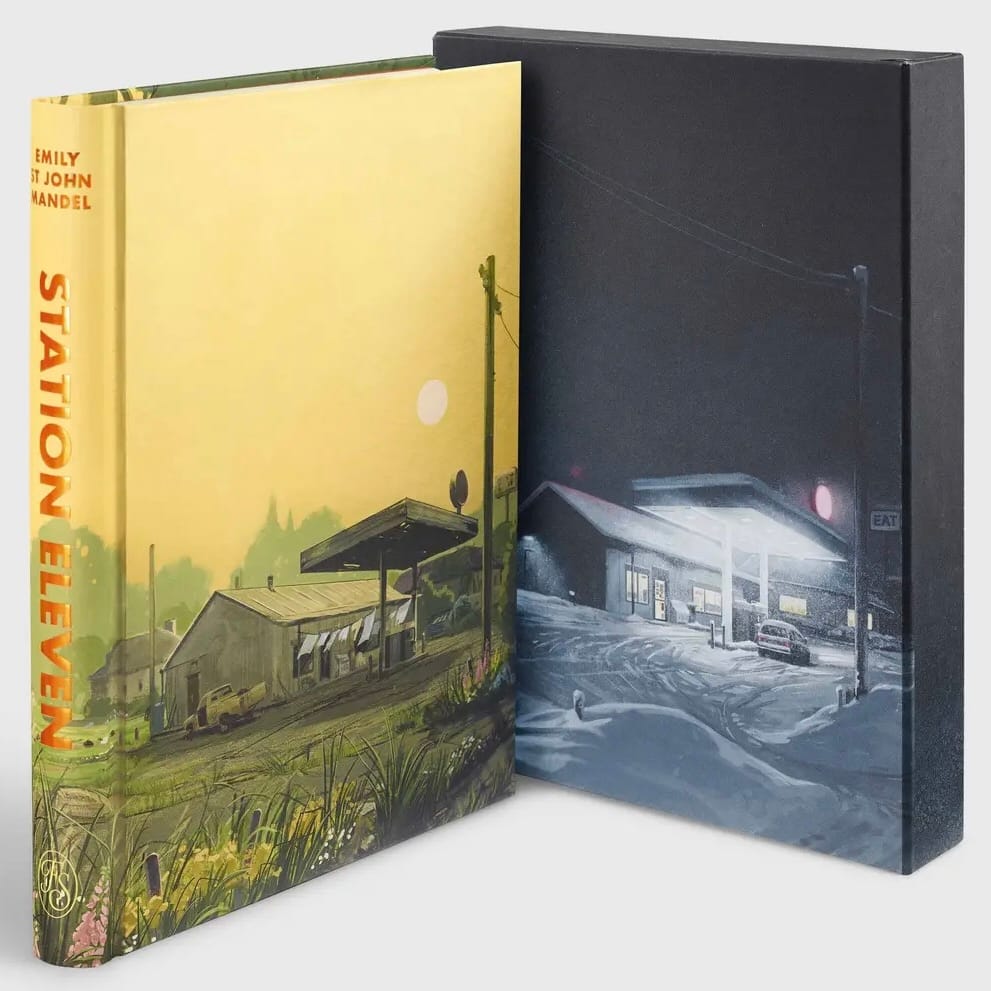
If you love books – books, not just reading – The Folio Society is for you. Maybe not the books themselves, though. The target demographic seems to be those people who have the means to drop $100 or more on a single book on a regular basis. I will confess to picking up a complete set of Jane Austen novels in an older Folio Society printing some years ago. Used, not new. Folio Society editions are lovely books. So tempting. I can spend a vast amount of time perusing their on-line catalog.
Back to Station Eleven. That was the point, right? Internet brain rot… So, I do not have The Folio Society edition. I picked up a used paperback copy this year, naturally, at a used book store while on a road trip. Mrs. Robidoux accommodates my addictions to books and coffee on our road trips, knowing little else will get me out of the house.
Do you remember the COVID-19 pandemic? Of course you do. The early days were full of uncertainty, conflicting information, overwhelmed medical systems, and so many tragic deaths. Perhaps you lost a friend or loved one. Perhaps you are still struggling with lingering effects. In the aftermath, it was easy to imagine something far worse. But, somehow, Emily St. John Mandel imagined something worse five years before the corona-virus epidemic of 2019 had expanded our understanding of ‘global pandemic’.
In Station Eleven, surviving the rapid onslaught of the Georgia Flu (referring to its origin in the country near the Black Sea) is an exception. The story starts in Toronto, Canada. The spread of Georgia Flu is so swift and lethal, through the ‘gift’ of international air travel, that within a few days normal society ceases to function. News broadcasts monitoring the global disaster flicker out, then electricity fails. Within a few weeks, those people remaining have two great fears: dying or being entirely alone. The story picks up some twenty years later with a small group known as the Traveling Symphony touring in the Great Lakes region. They perform for scattered communities eking out subsistence among the decaying remains of civilization.
Mandel includes those elements necessary to envision a breakdown in order: The desperate actions required for survivors to stay alive; people banding together for safety; the strong and ruthless having sway where not resisted; the strange landscape littered with evidence of advanced technology which no longer functions; the reduction of life to necessities of food, water, shelter; the eccentricities of individuals grasping for explanations, as they teeter on the edge of sanity in a world they no longer recognize.
Well, was that grim enough? That is dystopia. Which, as Book Bound readers know, I have a penchant for. Maybe an unhealthy one. But, unlike many dystopian works, what struck me most about Station Eleven was not the vividly gripping portrayal of a post-cataclysmic world, powerful as that was. What kept me reading was the humanity of the characters, from those who did not survive the flu, to those who struggle to remember them twenty years later. A key narrative device within Mandel’s story is a two-volume set of comic books or graphic novels entitled Station Eleven (hence the name of the novel). The comic books are a self-published project by one of the characters. Their content, the artistic efforts of the creator, the journey the physical comic books take, all play a part in binding the story and the characters together. It was a curious, yet well-executed thread.
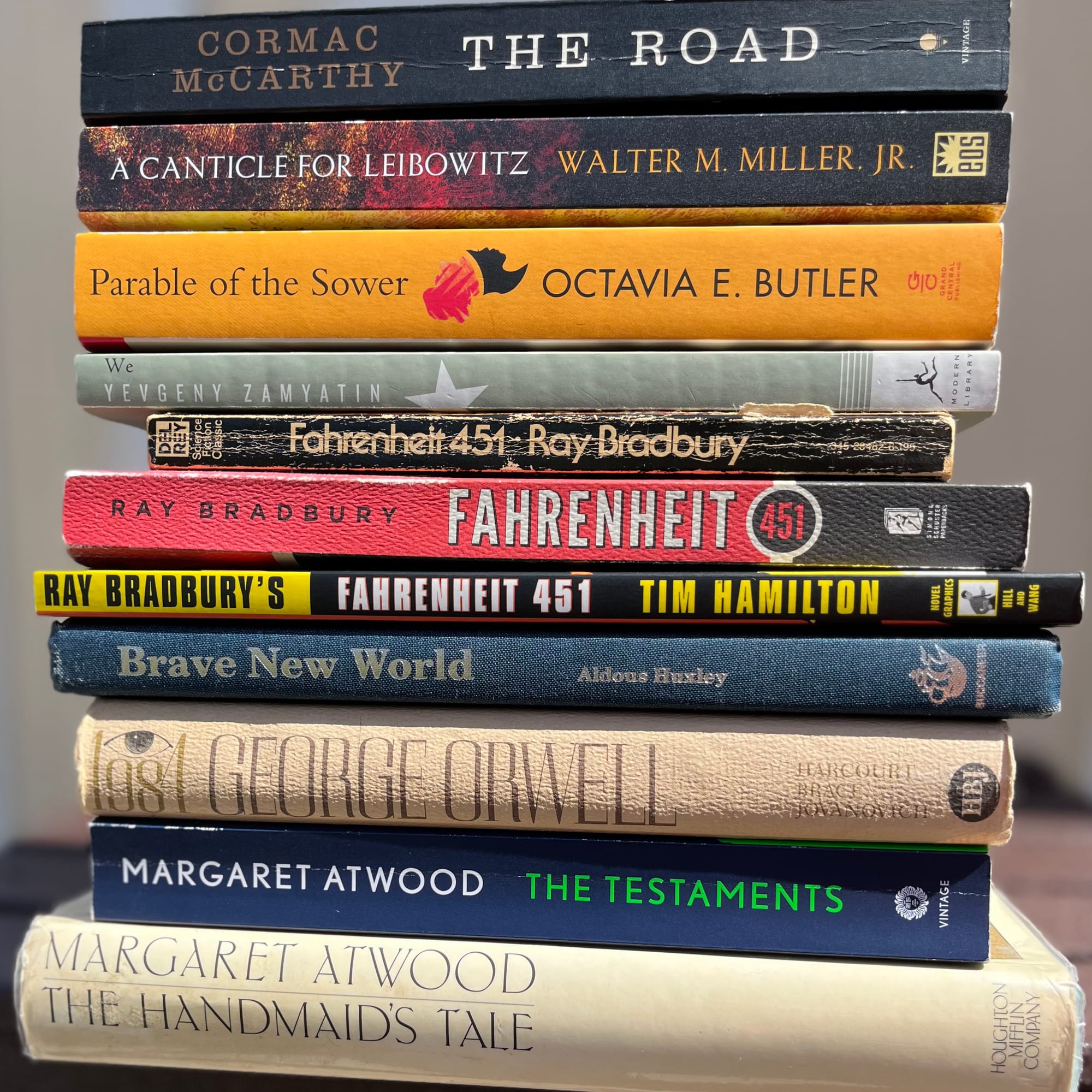
In our contemporary society, where so much is predicated on the economic definition of human beings as ‘consumers’, Station Eleven leaves us with a message that what defines us as human, what makes us unique, is what we create. That creation might be a feeble attempt to reproduce a Shakespearean play or to perform a piece of classical music. It might be pulling out the pen or pencil to write or draw a new work. It might even be, as in Station Eleven, the creation of a new life within the loving bond of a new family in the shadows of ruin. That is why I think of Station Eleven as hopeful. In a grim, difficult world without the ease of electricity, the internet, air travel, freeways, grocery stores, Mandel still shows the spark of Creation in her characters, their stubborn refusal to succumb to the darkness, their courage to begin again and make things new.
May that be true of each of us.
Until next time…