Book Bound #50 – 1776

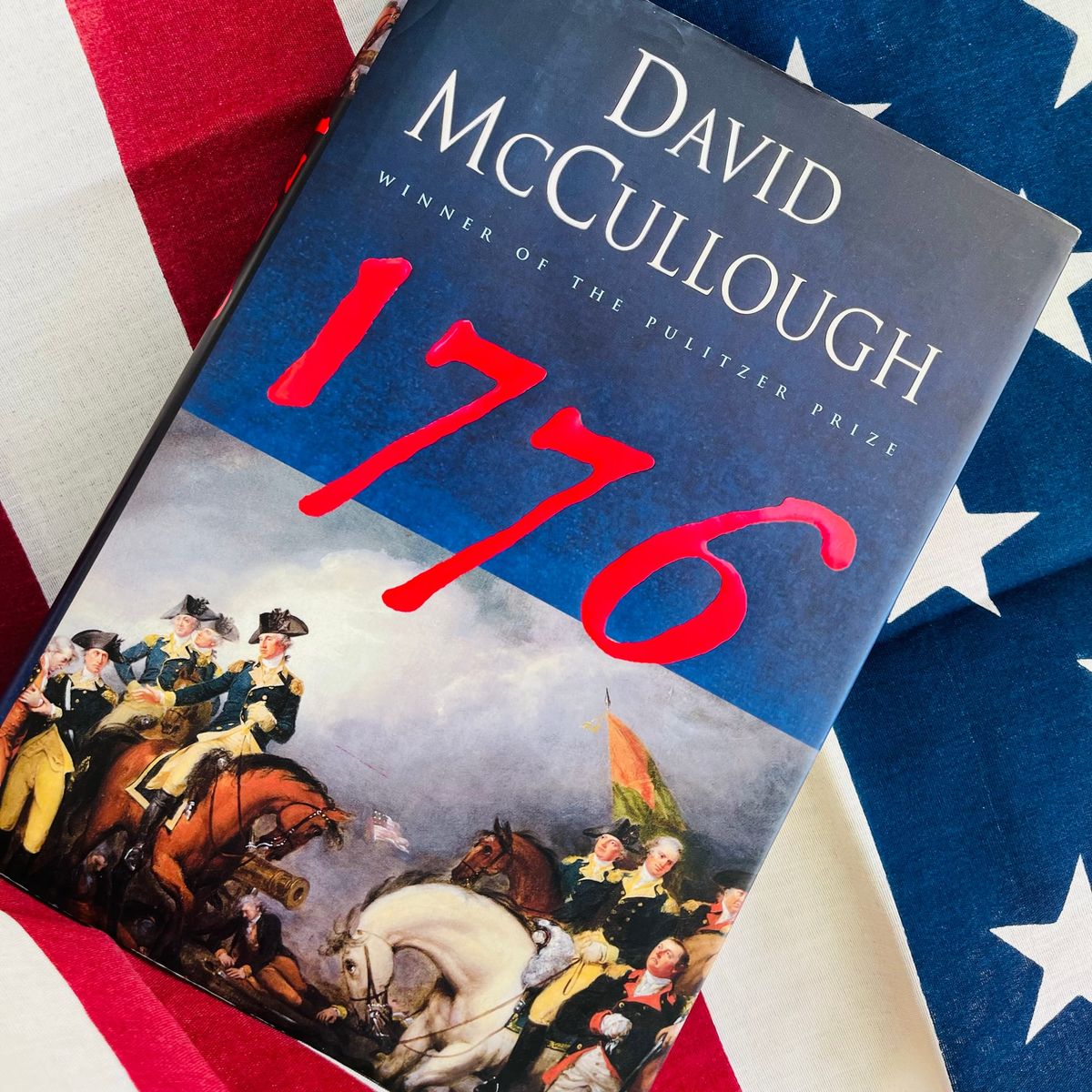
Fifty years ago, when the United States celebrated its bicentennial, I had just finished my junior year of high school in Douglas, Wyoming. Mom had purchased collector’s maps to inspire my younger brother and I to accumulate the commemorative quarters the U.S. Mint was issuing for each state. Like most shared endeavors with my brother, it turned into a competition to see who could collect all 50 quarters first. I think my brother did. The collections have long since disappeared. I do remember watching the 1976 Fourth of July fireworks at the Wyoming state fairgrounds with my then girlfriend. At least, we watched some of the time…
There were events of all sorts this year to commemorate the 250th anniversary of the Declaration of Independence. I was not privy to any except our local fireworks display in July. However, in the aftermath of rancorous and momentous midterm elections this month, I thought reading a book related to the founding of this still great country was warranted. I will keep my opinions about the outcome of the elections to myself, to avoid chasing all sorts of ideas down rabbit holes.
No Turning Back
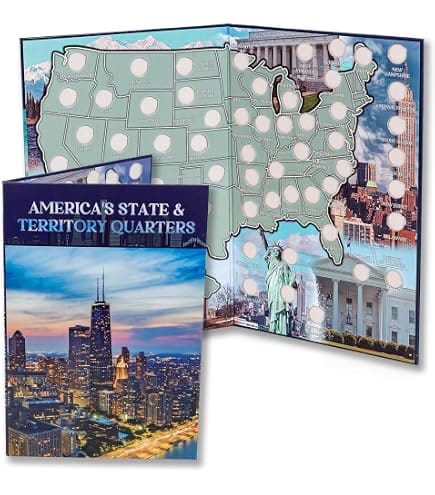
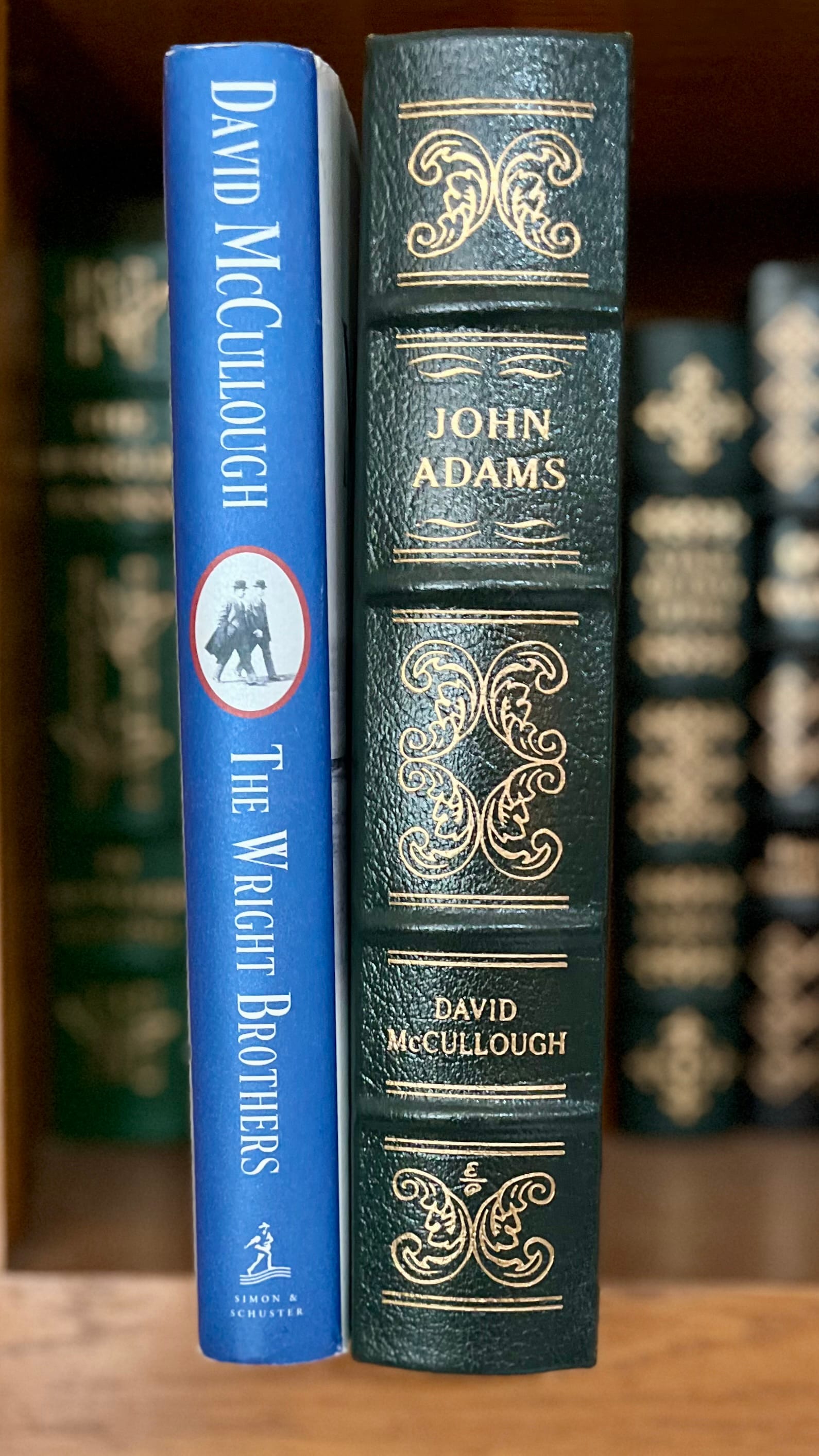
1776 is the third book I have read by noted historian and Pulitzer Prize Winner David McCullough. The first was the excellent volume John Adams, which garnered McCullough his second Pulitzer Prize in 2002. The second was The Wright Brothers, which I reviewed in September of 2024. Written as a companion book to John Adams, 1776 was published in 2005. I picked up a used copy some years ago and it languished on the shelf ever since.
After spending the better part of two weeks both combatting a sinus infection and trying to read This Side of Paradise by F. Scott Fitzgerald, I was ready to read something that I had some familiarity with by an author I respected. Fitzgerald has not worked for me. I didn’t like The Great Gatsby, I don’t like This Side of Paradise. I just do not connect with Fitzgerald’s characters, who seem remarkably lacking in clear motivations or values other than self-indulgence. Perhaps that was the spirit of the age he was writing in.
1776 covers the major political and military events of the American Revolution from October 26, 1775 to January 1, 1777, primarily the actions of the Continental Army under the direction of George Washington. Of course, the fateful Declaration of Independence on July 4 is key. This may be familiar territory to many readers. However, McCullough’s gift as a historian is to bring the personalities of history to life. It is not an easy task. I was astounded at the volume of footnotes, research items, and bibliography for 1776.
The body of the book is divided into three main sections. Part I: The Siege – covers the American siege of British-occupied Boston in the aftermath of the Battle of Bunker Hill. Part II: Fateful Summer – tracks the battles around New York city for control of that vital city and port; Part III: The Long Retreat – follows the desperate but resolute Washington as he tries to salvage his army after the series of debacles around New York, ultimately culminating in two morale-boosting victories at the close of the year.
Why Read 1776?
I was reminded of how unlikely it was to form a nation out of thirteen colonies, each with their own peculiar cultures and priorities. Even with the separation of 3,500 miles of Atlantic Ocean, the Americans were still attempting to declare independence from the greatest military power of the time. The population of the colonies was about 2.5 million, including almost half a million slaves. A large percentage of the remaining two million were Tories – loyal to the Crown. Great Britain’s population was about 8 million.
In the modern era, where real-time war events are available on-line, it is hard to fathom how little information George Washington and his staff had to monitor enemy forces. So much communication relied on letters carried by mounted postmen.
It was the excerpts of letters from Washington to his staff, to Congress, to his wife, to friends that McCullough used to provide insight into a man both deeply concerned to the point of despair, yet resolutely committed. Similarly, correspondence from other major characters illustrated the poignancy of wartime separation, of hopes and fears, of misconceptions and insights. In addition to the men and women in Washington’s circle, I found out about British General’s Howe, Cornwallis, Clinton, and others from their letters.
Washington is seen as a man of courage and perseverance who learned from mistakes and sought the insight of his top officers regularly. His strength was not his brilliant military strategy, but in identifying capable officers despite their lack of prior military training or experience, particularly Nathaniel Greene (a 33-year-old Quaker) and Henry Knox (a 25-year-old bookseller). Against terrible odds in brutal conditions, Washington preserved the American army so essential to the cause. As long as the army was an effective fighting force, the Revolution remained viable.
Remarkably, we are beneficiaries today, 250 years later, of that great cause for which those individuals pledged their lives, fortunes, and sacred honor, in the hope of achieving something magnificent for their posterity.
Until next time…