Book Bound #49 – The Reason for God

My first review on this Books, Mostly blog was intentionally provocative. I had to level-set where I stood on certain matters of faith. My persona is steeped in a religious heritage that influences how I read books, how I see other people. Writing is how I grapple with that.
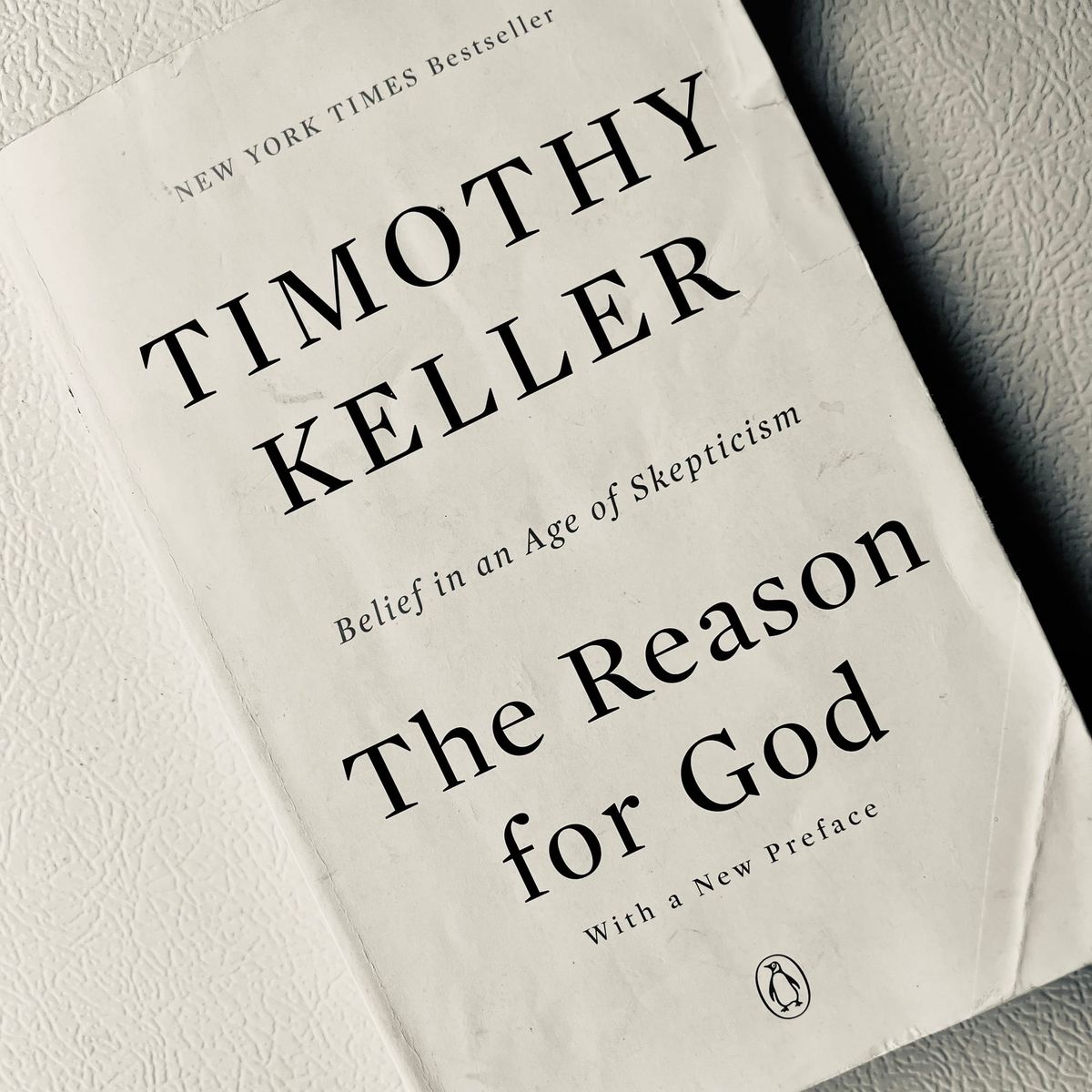
So in my quest for truth and honesty, I read yet another book about faith: The Reason for God, by Timothy Keller, published in 2008. I found articles he had written to be intelligent and thoughtful. I was sad to learn that he passed away 2023. Keller was known for avoiding political labels, adhering to orthodox Christian teaching, inviting honest dialogue. I will be diving into the deep weeds of his book: the preface, introduction, and epilogue, along with the main content.
Preface and Introduction
My 2018 edition includes an updated preface, where Keller notes the changes in the religious and political climate in the ten years since he originally wrote The Reason For God. (Hint: the 2016 election)..
The introduction covers Keller’s own objections to Christianity as a young adult.
- Intellectual - So many tough questions about Christianity.
- Personal - He never experienced God’s presence personally.
- Social - Where were Christians who cared for justice in the world, but grounded it in faith, not their subjective feelings?
He describes how he overcame those obstacles, which eventually led to his pastoral experience in Manhattan, where he encountered many people who, like him, had questions and doubts about Christianity.
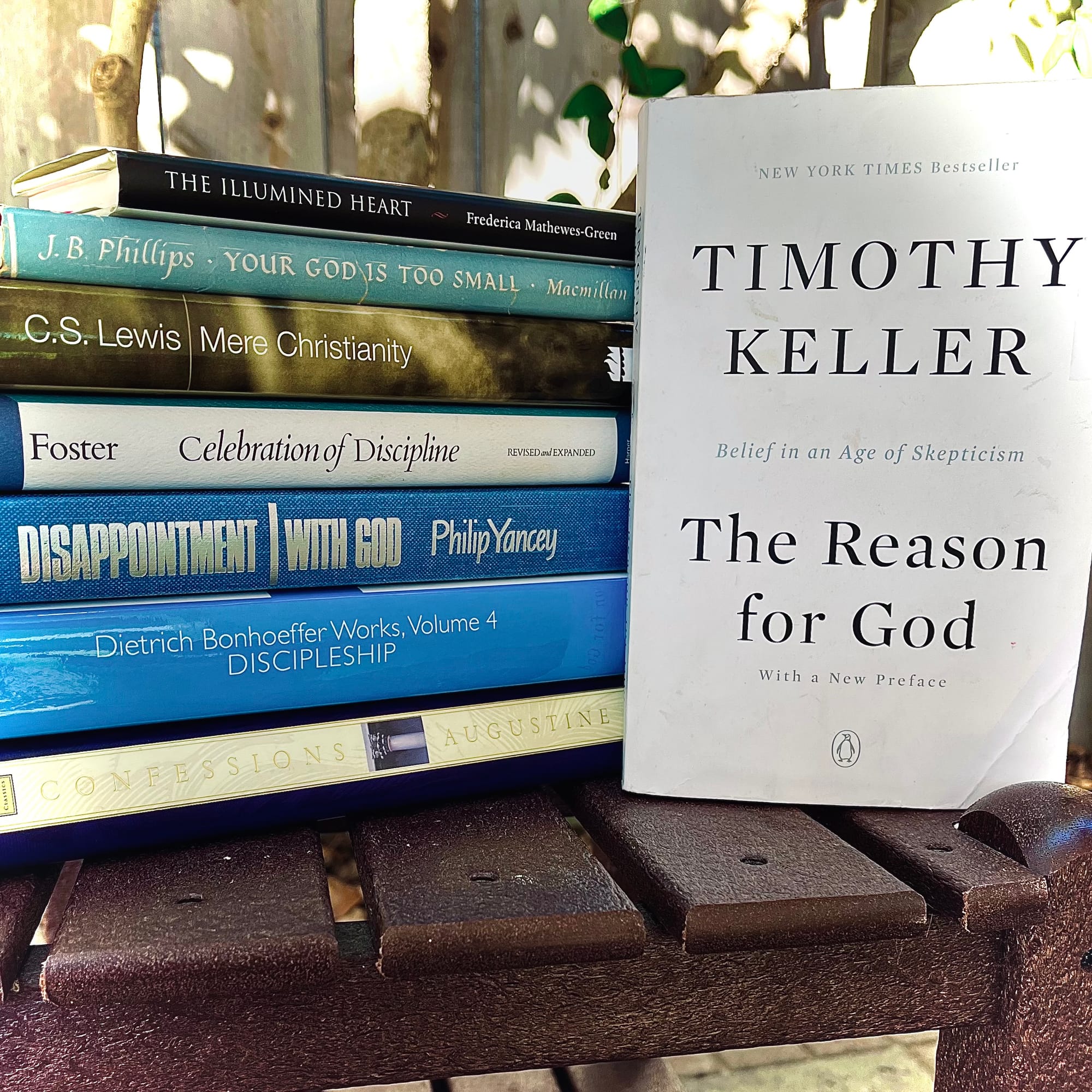
The body of the book is divided into two main sections. Part 1 covers seven key objections to Christianity and Keller’s answer to those objections. Part 2 covers seven reasons to believe. Where was Keller persuasive and where was he not? Read on.
PART 1: THE LEAP OF DOUBT
- There Can’t Be Just One True Religion. Keller asserts that Christianity is true, but it accommodates respect for other religions and has overlapping values. Keller asks, which set of unavoidably exclusive [religious] beliefs will lead us to humble, peace-loving behavior? ’True Christianity’ is the answer. Do I agree? In principle.
- How Could a Good God Allow Suffering? Keller agrees suffering is a problem, for all religions. Then, he does a diversion. That is, Jesus suffered more than anyone in his cosmic separation from God on the cross. Keller asserts that if I “embrace the Christian teaching that Jesus is God and that he went to the Cross”, I can know that God is with me in my sufferings. I can neither prove nor refute the magnitude of the suffering of Christ. However, I wonder about the scope of his suffering. He never lost a child, he was never betrayed by a spouse, he never had to grow old and feeble as his mind failed. Jesus suffered in his own, exclusive way. How much, I don’t know. Keller does not discuss that a fully divine and fully human Jesus would have a perspective on eternity that no other human could. A few hours on the cross in the scope of eternity? Humanly daunting, yes. But divinely doable. Consolation in suffering sounds dependent on my ability to ‘embrace’ the truth of Jesus.
- Christianity Is a Straightjacket. Keller asserts that truth exists. If some things are true, contradictory things are not true. By definition this is exclusive. I completely agree. Keller spent a lot of time talking about the cultural diversity of Christianity to show that moral diversity and cultural diversity are not equivalent. Ultimately, the constraint of Christianity is doing what God has made us to do because we love God. Here, Keller quotes C.S. Lewis to equate love to action - something you do. Again, it seems Christian action or behavior is critically important.
- The Church Is Responsible For So Much Injustice. This section bothered me. First, Keller uses environmental determinism to explain good character. Then, he asserts that flawed, broken people from negative environments are more likely to turn to Christianity. Churches are full of bad people receiving God’s grace – and, apparently, still doing bad things. Then he gives positive examples of Christians working for justice. Basically, when the church has misbehaved, it was not acting like Jesus. How is it that the love of Jesus is transformative on the one hand and yet so many who claim to have encountered Jesus, still struggle to function in the image of God? Keller doesn’t really answer this.
- How Can a Loving God Send People to Hell? Here, Keller explains that judgement is a necessary corollary to moral values, that love is compatible with justice. I agree. If there is right and wrong, wrong-doing must be addressed somehow. Keller says ultimate justice must rest with God because we humans are too prone to vengeance. Absolutely. But then, Keller goes on to define hell as “the trajectory of a soul, living a self-absorbed, self-centered life, going on and on forever.” Which I found bizarre. A trajectory is not a thing. It is the route a thing takes. So, hell is a journey? In his endnotes, Keller states “All descriptions and depictions of heaven and hell in the Bible are symbolic and metaphorical… Having said that does not at all imply that heaven and hell themselves are ‘metaphors’“. That makes it very convenient for Keller to interpret the ‘symbols’ or ‘metaphors’ in a way that works for him. Then Keller goes on to conclude that the idea that God is love came from the Bible. Yes, the Bible says that. But, what about people with no exposure to the Bible who have an idea of transcendent, divine love? Where did that come from?
- Science Has Disproved Christianity. Keller and I agree that science and faith are two different domains. Faith is not in conflict with science. However, when creationists try to prove the Bible scientifically, they are essentially falling into the same trap as the scientists, moving the domain of faith into the realm of scientific proof. Keller considers Genesis 1 a form of poetry. He says we can accept certain miracles in the Bible, just not the miracle of creation. It feels like he avoids conflict with science by a flexible interpretation of scripture. Which is in itself problematic.
- You Can’t Take the Bible Literally. Fitting segue. In the main text, Keller says that Christian faith requires belief in the Bible. However, he narrows that down to the gospel accounts of Jesus’ life as most essential. In a footnote he states: “I am not here trying to argue for the complete trustworthiness of the Bible, only that it’s portrayal of the life and teaching of Jesus is historically accurate… Speaking personally, I take the whole Bible to be reliable not because I can somehow ‘prove’ it all to be factual. I accept it because I believe in Jesus and that was his view of the Bible.” This is circular reasoning: I believe in Jesus because I believe the four gospels are accurate. Therefore, I believe the rest of the Bible is accurate because Jesus said so. There are other believers who say that if you don’t accept the Genesis account of creation, then the rest of the Bible is illegitimate. So who’s right?
PART 2: The Reasons for Faith
8. The Clues of God. - That life exists and that humans recognize beauty and meaning point to a higher source. I agree. The real concepts of love, truth, and beauty hint at something greater than ourselves. Which is OK to call God.
9. The Knowledge of God. Keller states that humans understand moral obligation, have an innate sense of right and wrong. Virtually every person realizes they ought to behave a certain way. Yes, I agree. I also heartily concur that the evolutionary theories for morality are weak. For example, that I innately behave in the best interests of ‘my clan’ even when it is not in my best interest. Unlikely. I need a greater reason to not be selfish. Keller makes a great point: what is the non-religious basis for human rights? Slim. So, yeah, if God is dead, now what? I end up no better than any other organic creature. “Whether we are loving or cruel in the end would make no difference at all.” Keller says we live as if our choices matter, that we innately recognize, at minimum, a higher authority. God, if you will.
10. The Problem of Sin. Here, Keller defines sin as a wrecked relationship with God, one another, and the whole created order. He says, “A life not centered on God leads to emptiness.” Keller doesn’t clarify what he means by ‘centering’ our life on God, but he uses that phrase often. In his discussion of sins’ impact on social relationships, he describes the kind of behavior - despising and demonizing opponents - that is too often evident in American Evangelical Christianity. He ends with this statement: “Jesus is the only Lord who, if you receive him, will fulfill you completely, and, if you fail him, will forgive you eternally.” That is a strong promise. It is not clear to me what he means by ‘receive’ and ‘fulfill’. But, I think he means that relationships with God, others, and creation are in some way restored.
11. Religion and the Gospel. Keller defines ‘gospel’ (literally ‘good news’) as salvation through grace. He contrasts that with religion, where people try to save themselves by their own efforts. He makes these statements about religion: “It is possible to avoid Jesus as Savior as much by keeping all the Biblical rules as by breaking them”; “In religion, we try to obey the divine standards out of fear.” How about a third option: I do good because I see the value in it, for myself and those around me? Keller explains that grace means: I cannot save myself; I cannot despise those who do not believe as I do. But then, he goes on to say that now that God has saved you, you are so filled with gratitude that you do all those good things from the inside motivation of joy! See? Doing good actually DOES matter. Then, I ran into this very perplexing statement: “The gospel makes it possible to have such a radically different life. Christians, however, often fail to make use of the resources of the Gospel to live the lives they are capable of in Christ.” What does that even mean? What are ‘the resources of the Gospel’? Is Keller saying Jesus transforms, but if He doesn’t, it is your fault? It sounds like it.
12. The (True) Story of the Cross. Now we are getting to the heart of Keller’s book, and of Christianity. That is, the death of Jesus on the cross was necessary. Sin requires forgiveness. Bearing the sin of the other is costly. Real forgiveness involves suffering. Anyone who has had to forgive another person feels the truth of that. Forgiveness is what makes the Jesus story so powerful. Then Keller moves on. Real love is personal. That is, Jesus on the cross is just a story if it isn’t personally real to me, if it doesn’t get into my being and change me. Keller calls Christianity, people transformed by Jesus, a great reversal: “In this new counterculture, Christians look at money as something to give away. They look at power as something to use strictly for service.” I have seen Christians who do embody this ethic. I have also seen the opposite. I suspect this is why Keller was so troubled by changes in white evangelical Christianity in the last years of his life.
13. The Reality of the Resurrection. Christianity without the resurrection is… something, but probably not a faith early Christians would recognize. Keller makes this point. He also says: “If Jesus rose from the dead, then you have to accept all he said...” The resurrection proves He is God. The resurrection gives Christians hope for eternity. Keller goes on to explain that the resurrection motivates Christians to live unselfishly in this life, knowing there is eternal justice. I hope that is true. But I don’t have a ready explanation for why many non-Christians also live unselfishly.
14. The Dance of God. Here, Keller tried his best to convey the unfathomable: the uniquely Christian concept of the Triune God (Father, Son, Holy Spirit). Keller discusses how God loves and glorifies ‘himself’, which is ‘other-centered’ in the trinity. Logically, yes, love requires an object. A God focused on loving Himself seems weird. So, Keller uses the complexity of the trinity to explain God’s love. He goes on to say we can have joy and love IF we ‘center’ our lives around God. Also, “when we discern Jesus moving towards us and encircling us with an infinite, self-giving love, we are invited to put our lives on a whole new foundation.” What does it mean to ‘discern Jesus moving towards us’ and ‘encircling us’? I have to give Keller credit for trying, but…? He says the goal of this love is ‘restoration’ to a new perfected Garden of Eden. Keller’s ‘future dance’ eliminates the heaven most Christians think of – that place they go after they die. Not saying he is wrong. But it isn’t what I hear at most Christian funerals.
EPILOGUE: Where Do We Go From Here?
Keller’s hope is that the reader will repent (confess the sin of relying on self instead of God), believe (turn to Jesus and embrace a relationship with him), then commit to a community of other believers. Then, God will meet them. Oddly, in his section called ‘The Trauma of Grace’, Keller explains that “It is… dangerous to give the impression that finding God is basically a technique…” The 'technique' to find God seemed to be the point of his book.
My Three Confessions and Keller’s Book
I need to quickly refer back to my specific viewpoints on the Bible, prayer, and church from my February, 2026 post in relation to Keller’s book.
Infalliblity of the Bible: Keller is sure that the Jesus story in the gospels is true. He extrapolates ‘infallibility’ from that. His treatment of the creation narrative, heaven, and hell don’t seem to fit. To paraphrase the Princess Bride movie, ‘Mr. Keller, I don’t think infallibility means what you think it means.’ Regardless, my view is unchanged.
Prayer: Keller does not directly address prayer, but does dwell a lot on subjective personal experiences with God. Either there is something wrong with me (because I don’t have those experiences) or not all people have a personal experience with God.
Christian community/church: I agree with Keller that churches naturally attract needy, flawed people. But then I wonder where the transformative personal experience goes. I have been burned too many times to entrust myself to a typical church in the future.
IN CONCLUSION
The Christianity I have been immersed in most of my life feels like it wants it both ways - if you believe in Jesus, you are saved. But then, if some of your behaviors are bad, then you are clearly not saved. So, what saves you? Belief? Behavior? Both? Neither?
Those who heard this asked, “Who then can be saved?” Jesus replied, “What is impossible with man is possible with God.” Luke 18:26-27
Until next time…