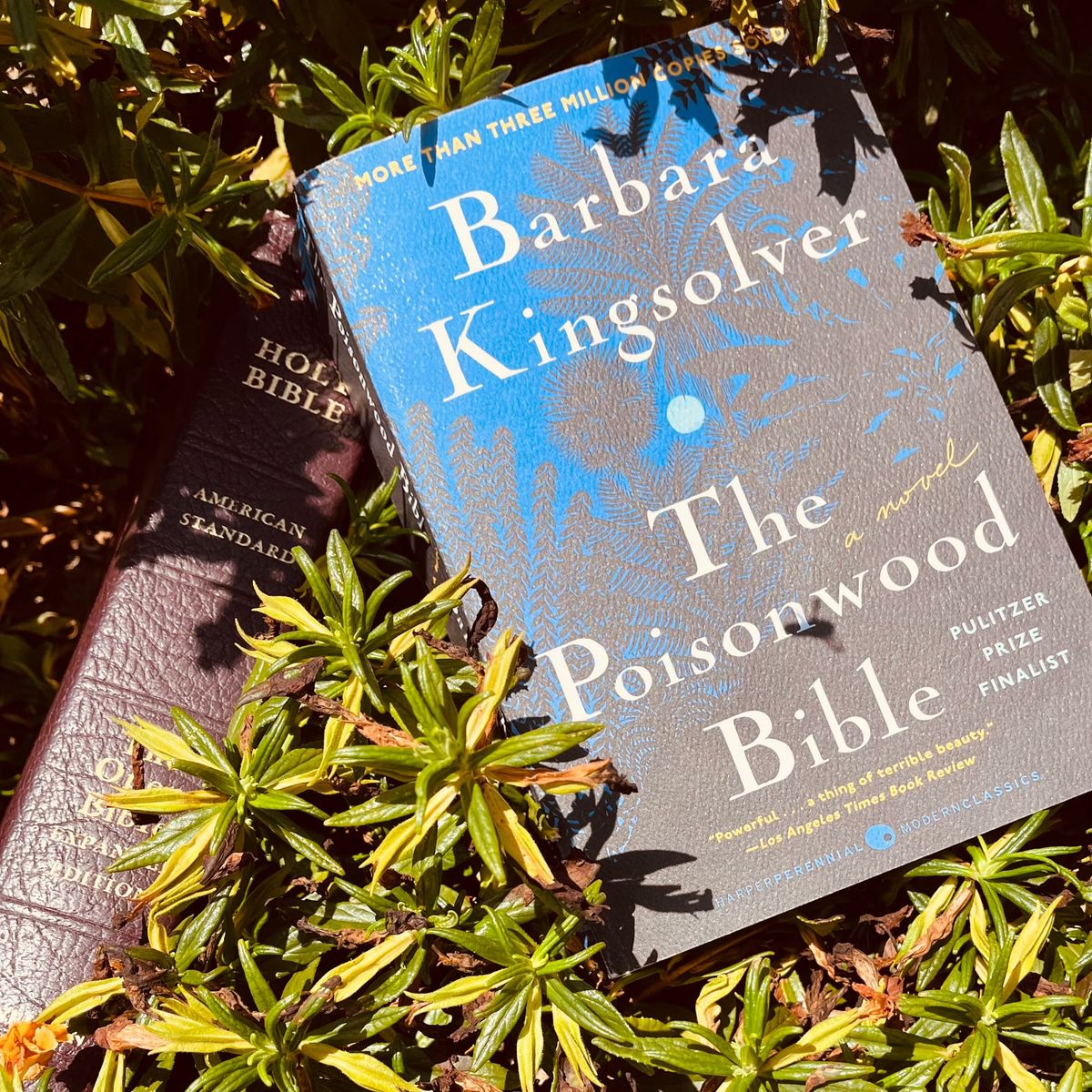
Book Bound #46 – The Poisonwood Bible

What is it that draws me to a particular story? Perhaps the elegant prose, the snappy action, a complex plot. Certainly, though, it is when I see something of myself, hints of my experience, my hopes, my failings. It can be both exhilarating and disturbing.
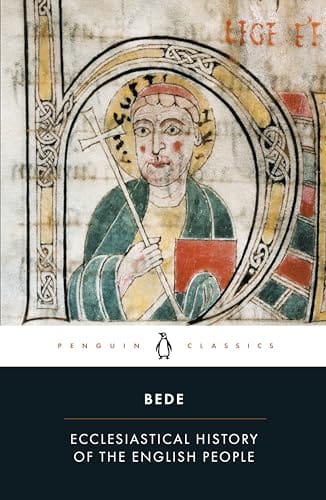
Hat tip to Aubrey Robidoux (daughter #4) for pointing me to The Poisonwood Bible, a 1999 Pulitzer Prize finalist weighing in at over 500 pages. This from a girl who had to be coerced into reading anything during our grand experiment of home education. Oddly, one book she cannot forget is Bede's Ecclesiastical History of England. Her synopsis: “It highlights their greatest hits of doing nothing, fighting with the Church, and dying by age 33.” Like The Poisonwood Bible, it is a record of the struggle between politics, faith, superstition, and local culture – in a much earlier age. We agreed that The Poisonwood Bible, by Barbara Kingsolver, was far more scintillating.
The Poisonwood Bible tells the story of a family serving as missionaries in the Congo in the 1960’s. But it is much more. It is the story of Nathan Price, a Baptist minister driven to do God’s work at any cost. His wife (Orleanna) and four daughters (Rachel, Leah, Adah, Ruth May) bear the brunt of Nathan’s burden. While he is consumed with converting the lost, the rest of the family work to ensure basic survival in the lush, but deadly rainforest village. They quickly consume their minimal, comically inadequate supplies and must learn to sustain themselves as their tribal neighbors do. Week after week, Nathan attempts to preach to the native population through a translator, hoping for a triumphal baptism of converts which never materializes. Ominously, Belgian colonialism and American commercialism intersect with Cold War politics, resulting in a sabotaged independence transition and civil war. Though this greatly increases the danger to the Price family, Nathan refuses to budge. His calling from God is foremost.
I wept for the sins of all who had brought my family to this dread dark shore.
The brilliance of The Poisonwood Bible is not in the troubling dynamics of American interests and misguided evangelical zeal, potent as it is. What Kingsolver does is craft five distinct, captivating personas (Orleanna, Rachel, Leah, Adah, Ruth May) as they try to understand their role in a mission they did not choose. Each is trying to survive as best they can. Each is trying, and often failing, to understand the motivations and actions of other family members. Mother and daughters struggle to know their duty, their allegiance, their guilt, their gifts. We see the story through their eyes, their thoughts, words, and deeds, all in the shadow of the powerful Nathan, who wields the authority of the undeniable Scriptures. Nathan answers only to God, author of the Book, prime cause for their dilemma. Wife and sisters view their brutal circumstances in unique ways. They grapple with their relationship to The Father (Nathan), God, Scripture, truth, each other.
This was my sticking point in my own little lame march to salvation: admission to heaven is gained by the luck of the draw.
The Poisonwood Bible raises significant questions about American corporate interests, government interference in foreign sovereignty, the vast chasm of culture, language, and history that separates the most well-intentioned American missionary from a tribal people in Central Africa. Kingsolver’s extensive bibliography hints at her thorough research. While the geopolitics of the story are interesting, that is not where I connected with The Poisonwood Bible.
We seem to be the church for the Lost of Cause, which is probably not so far afield from what Jesus himself was operating in his time.
My boyhood years in the 1960’s and early 1970’s included many Sunday evening church services with missionaries speaking about their endeavors and raising support for their next trip overseas. I was immersed in Scripture memorization in Sunday School and absorbed the importance of saving souls during weekly sermons. The Biblical book headings in The Poisonwood Bible and frequent scripture quotations are all familiar to me. On top of that, I am the father of five daughters, now all grown, and have been married to my wife for forty-five years. Each of them have told me how my forays into seeking God’s will for myself and, presumably, my family have affected them. However, even without a religious background like mine, The Poisonwood Bible makes for compelling reading, so say over 3 million buyers.
And perhaps it was not evil I saw but merely the way of all hearts when fear has stripped off the husk of kind pretensions.
A surface reading of The Poisonwood Bible might see it simply as a fictional critique of America and specifically American Christianity. In a small way, that is true. For this American Christian reader, it was more a warning about the dangerous lure of certainty: that what I have received as Truth is unassailable; that my reading of an ancient and mysterious book is absolutely correct; that the people God has placed around me are merely accessories to some higher calling. When perhaps the truth is: what I have received should be questioned; that I need to reread that ancient book at least one more time; that the people God has placed around me ARE my high calling.
Don’t try to make life a mathematics problem with yourself in the center and everything coming out equal.
Until next time…